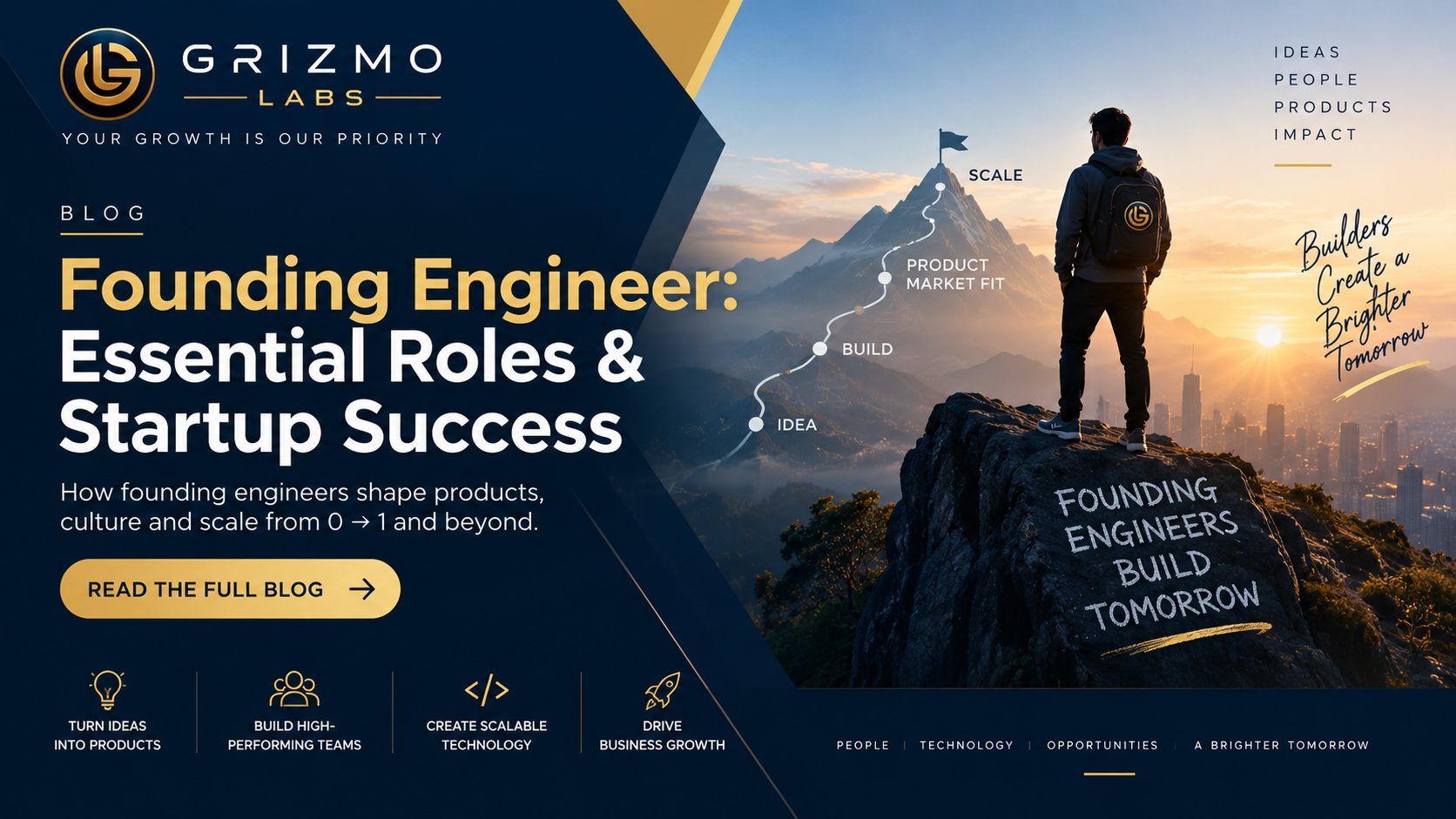
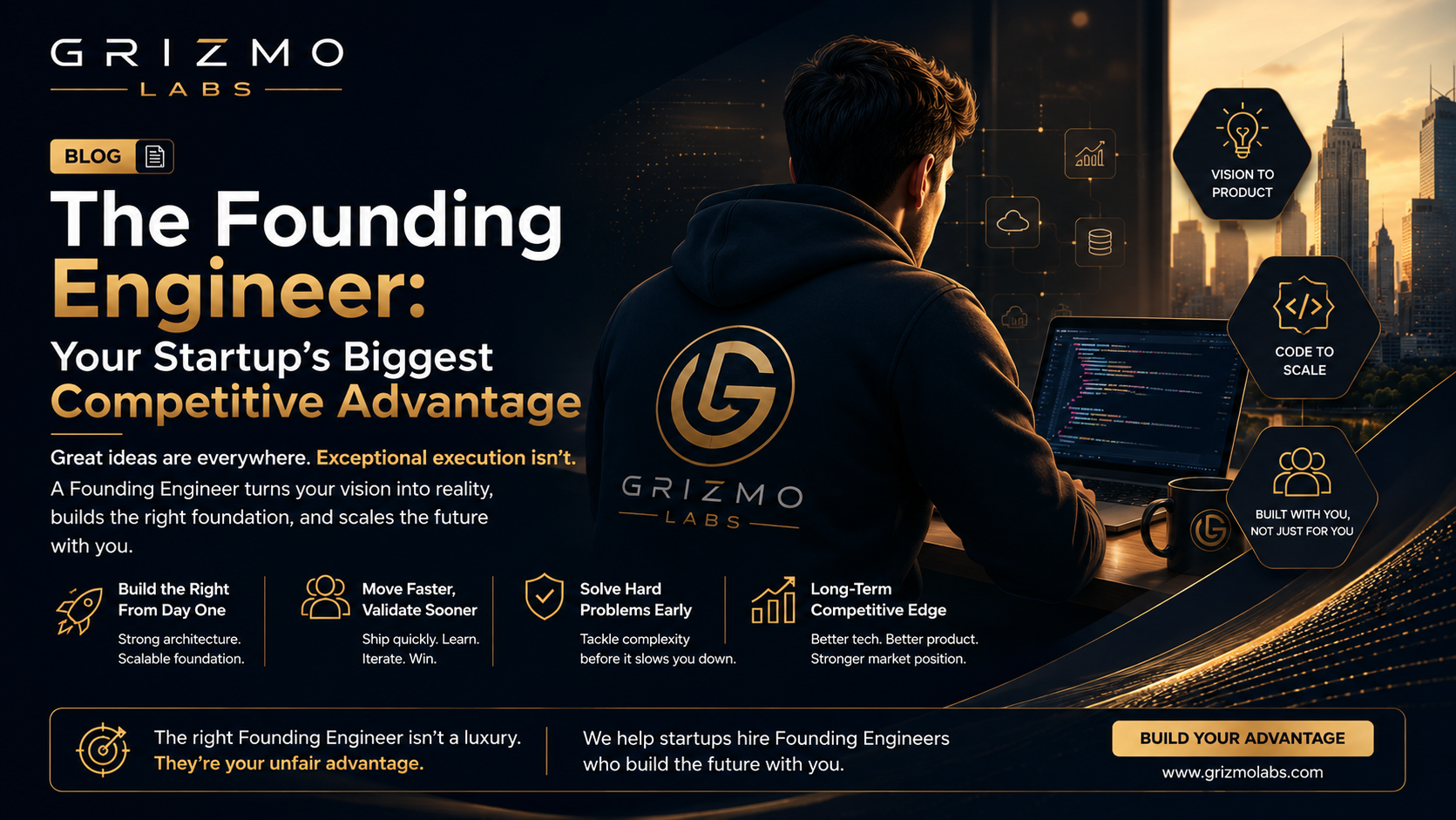
Discover why hiring the right founding engineer gives startups a competitive advantage through faster product development and scalable technology.
Launching a startup is exciting, but turning an idea into a real company is rarely smooth. While many founders focus on fundraising, customer acquisition, and product-market fit, one of the most critical early decisions is hiring the right founding engineer.
A founding engineer is far more than the first software developer on your team. They become your earliest technical leader, shaping your product, engineering culture, technology roadmap, and long-term scalability. Their decisions in the early stages can dramatically influence how quickly your startup grows and how painful future scaling becomes.
Whether you’re building an AI startup, SaaS platform, fintech product, or healthtech solution, choosing the wrong founding engineer can lead to delays, technical debt, and expensive setbacks that are difficult to undo.
What Is a Founding Engineer?
A founding engineer is one of the first technical hires in a startup. Unlike engineers in large organizations who typically work within established systems, founding engineers build everything from the ground up.
Their responsibilities extend far beyond writing code. They help founders make strategic technology decisions, design scalable architectures, build the first product, establish engineering best practices, and often participate in hiring future engineering team members.
Because startups evolve quickly, founding engineers must be comfortable working in uncertainty, adapting to changing priorities, and solving complex business problems with limited resources.
Why Every Startup Cannot Afford to Skip a Founding Engineer
1. Build the Right Technical Foundation
Every startup needs a strong technical foundation before scaling. A founding engineer selects the right programming languages, cloud infrastructure, databases, and software architecture that can support future growth.
Poor technology decisions made during the early stages often lead to technical debt that becomes expensive and frustrating to fix later.
2. Accelerate Product Development
Speed matters for every startup.
Instead of managing multiple freelancers or outsourcing critical product development, a dedicated founding engineer drives faster execution and maintains consistency across the product.
They establish coding standards, automate development workflows, improve deployment processes, and ensure the product is built for long-term scalability.
3. Avoid Costly Hiring Mistakes
Hiring the wrong engineer can delay product launches, increase engineering costs, and create unnecessary complexity.
Great founding engineers combine strong technical expertise with startup thinking. They take ownership, communicate effectively, solve problems independently, and focus on delivering business outcomes rather than simply completing development tasks.
When evaluating candidates, founders should assess:
- Technical expertise
- Ownership mindset
- Product thinking
- Adaptability
- Leadership potential
- Communication skills
- Startup experience
These qualities often matter more than years of experience alone.
4. Create a Strong Engineering Culture Early
Culture starts with the first few hires.
A founding engineer influences engineering standards, collaboration, documentation, code quality, and team values.
As new developers join the company, they naturally adopt the habits established by the founding engineer. Building a strong engineering culture early improves productivity, reduces employee turnover, and creates a high-performing team.
5. Prepare for the Demands of AI-Driven Growth
Modern startups increasingly rely on Artificial Intelligence, Machine Learning, cloud computing, and data engineering.
Today’s founding engineers should understand:
- AI integration
- Cloud-native architecture
- Distributed systems
- APIs and microservices
- Data engineering
- DevOps practices
- Scalable backend development
Hiring engineers with this combination of technical depth and startup experience is becoming increasingly difficult, which makes the search even more important.
Common Hiring Mistakes That Hurt Startups
Many founders make avoidable mistakes when hiring their first engineer.
Some of the most common include:
- Hiring solely based on programming skills
- Choosing candidates without startup experience
- Ignoring product thinking and business understanding
- Delaying technical hiring until after fundraising
- Outsourcing core product development for too long
Avoiding these mistakes can save months of development time and significant engineering costs.
How to Hire the Right Founding Engineer Before It Is Too Late
An effective hiring process should evaluate both technical ability and entrepreneurial mindset.
Look for candidates who demonstrate:
- Ownership and accountability
- Strong system design skills
- Customer-first thinking
- Ability to work with ambiguity
- Excellent communication
- Fast learning ability
- Passion for building products
The best founding engineers do not simply execute tasks—they become strategic partners in building the company.
Why Startups Turn to Specialized Recruitment Firms When Hiring Gets Hard
Finding exceptional founding engineers is difficult through traditional recruitment channels.
Startup-focused recruitment firms understand founder expectations, evaluate both technical and cultural fit, and maintain networks of experienced engineers who thrive in fast-paced environments.
Working with a specialized hiring partner reduces time-to-hire, improves candidate quality, and helps founders focus on building their business instead of spending months recruiting.
- Founding Engineer Hiring Services
- Startup Hiring Solutions
- AI Engineer Recruitment
- Executive Search for Startups
- About Grizmo Labs
- Contact Grizmo Labs
Sticky CTA Banner
Need to hire a founding engineer before a bad hire slows your startup down?
Partner with Grizmo Labs to find exceptional technical talent that fits your product vision and growth goals.
Industry Resources (External Links)
For additional insights into startup growth and engineering best practices, explore:
Final Thoughts
Hiring a founding engineer is one of the most important investments an early-stage startup can make. The right technical leader helps build scalable products, establish engineering excellence, attract investors, recruit top talent, and accelerate business growth. The wrong hire, however, can create costly delays and technical problems that slow everything down.
At Grizmo Labs, we specialize in helping startups hire exceptional founding engineers, AI engineers, product leaders, and high-impact technical talent. Whether you’re building your first MVP or scaling your engineering organization, our startup-focused recruitment expertise helps you find candidates who combine technical excellence with an ownership mindset.
Ready to build your founding team? Contact Grizmo Labs today and discover how the right technical hire can accelerate your startup’s growth.
Get in Touch
We look forward to hearing from you. Reach out using the details below.