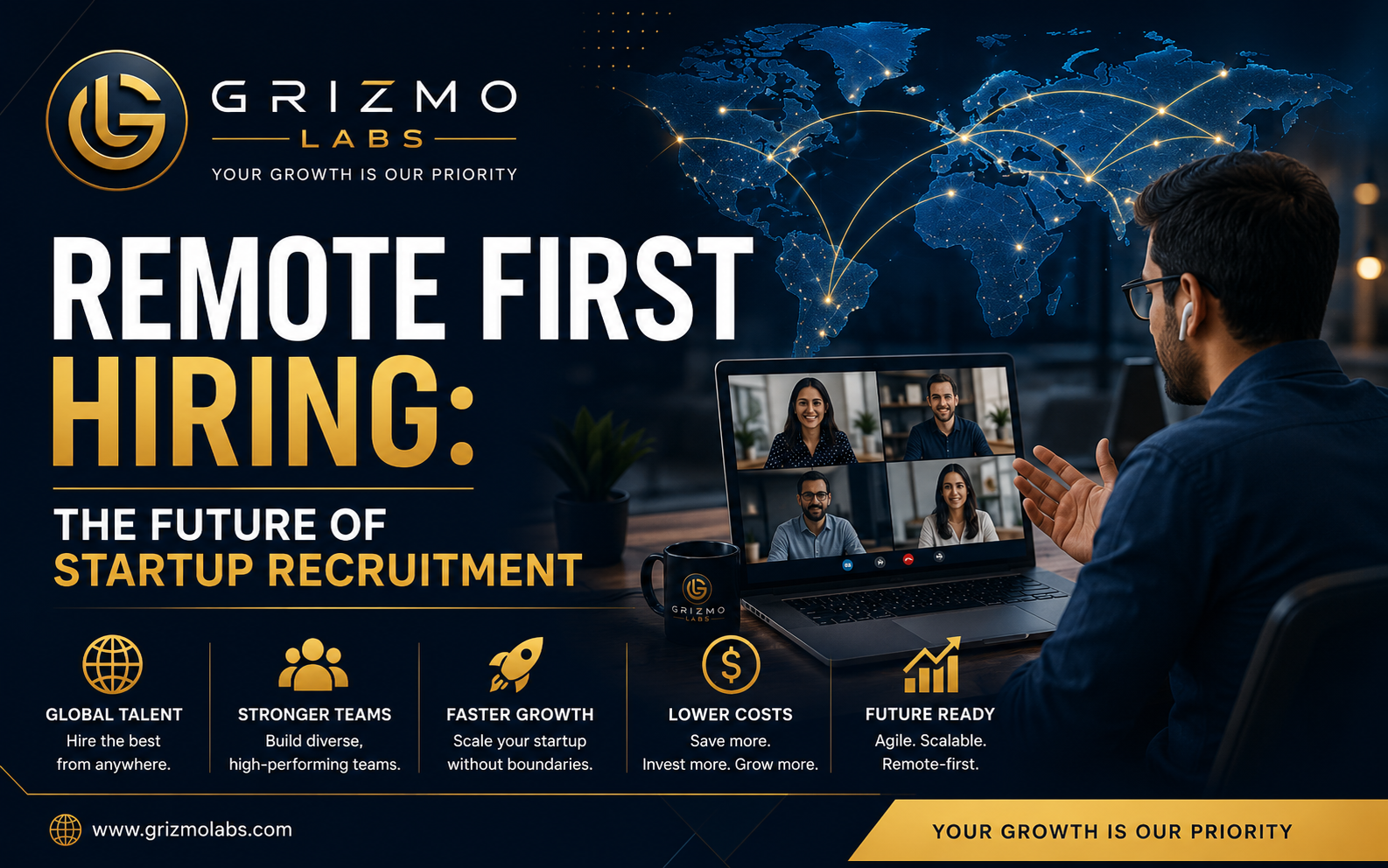
Remote-First Hiring is changing how startups build world-class engineering teams.
Instead of limiting recruitment to one city, founders can now hire the best talent from anywhere.
Moreover, as competition for software engineers, AI specialists, and product leaders intensifies, startups embracing Remote-First Hiring gain a powerful edge.
Today’s top engineers want meaningful work, flexibility, and real growth—not just office perks.
As a result, startups that remove geographic barriers can hire faster.
They reach a much larger talent pool and build stronger teams.
Whether you are a Seed-stage startup or a Series-C company, Remote-First Hiring can help you scale with confidence and speed.
Why Remote-First Hiring Gives Startups Access to Global Talent
Traditional hiring limits companies to candidates within commuting distance. However, the best engineers do not always live in major technology hubs like Bangalore, San Francisco, or London.
With Remote-First Hiring, startups can recruit exceptional engineers from across India, Europe, Southeast Asia, Latin America, and Eastern Europe. This means hiring decisions are based on skills, experience, and cultural fit—not location.
This broader talent pool increases the chances of finding specialized engineers in AI, Machine Learning, Cloud, DevOps, Cybersecurity, Data Engineering, and Backend Development.
In addition, startups no longer need to compete only with local employers. Instead, they can access global talent that matches their technical needs and growth goals.
How Remote-First Hiring Attracts Better Engineers
The modern workforce expects flexibility.
Experienced engineers today value autonomy, work-life balance, and time for deep, focused work. Therefore, companies that offer remote opportunities are often more attractive than organizations that require daily office attendance.
Remote work also helps engineers avoid long commutes and spend more time solving complex technical problems. This leads to higher job satisfaction, stronger engagement, and better productivity.
When startups adopt Remote-First Hiring, they become far more appealing to senior engineers who want flexibility without sacrificing career growth.
Remote-First Hiring Helps Reduce Time-to-Hire
Hiring speed is one of the biggest competitive advantages for startups.
Every week a critical engineering role stays open can slow product development, delay customer delivery, and hurt business growth.
Fortunately, Remote-First Hiring removes many traditional hiring barriers. Candidates do not need to relocate before joining, interview scheduling becomes easier across time zones, and companies receive applications from a much larger talent pool.
As a result, startups can reduce their time-to-hire while improving offer acceptance rates.
Faster hiring means products reach customers sooner, helping startups stay ahead of competitors and move with confidence.
Remote-First Hiring Cuts Costs and Extends Runway
Every startup operates with limited resources.
Office leases, relocation packages, daily office operations, and infrastructure expenses consume valuable capital that could otherwise be invested in innovation.
By adopting Remote-First Hiring, founders can significantly reduce operational costs. Consequently, they can invest more in engineering, product development, customer acquisition, and research.
Lower costs also extend financial runway, giving startups more time to achieve product-market fit and build sustainable growth.
For venture-backed companies, every dollar saved creates more room to innovate and scale.
Remote-First Hiring Builds Diverse and High-Performing Teams
Innovation thrives when diverse perspectives come together.
Remote-First Hiring enables startups to build teams with different experiences, cultures, and technical backgrounds. As a result, engineering teams become more creative and better equipped to solve complex business problems.
Distributed teams working across multiple time zones also provide better customer coverage, faster issue resolution, and continuous product development.
Instead of relying on a single office, startups can create a truly global engineering organization that operates around the clock.
Best Practices for Successful Remote-First Hiring
Building a successful remote team requires more than simply hiring people online.
Successful startups invest in structured onboarding, clear communication, transparent documentation, and measurable goals.
They also use collaboration tools such as Slack, Microsoft Teams, Notion, Jira, GitHub, and Zoom to keep distributed teams connected and productive.
Regular one-on-one meetings, virtual team-building activities, and continuous feedback help maintain a strong company culture.
When these practices become part of everyday operations, Remote-First Hiring leads to stronger collaboration, better retention, and improved long-term performance.
Challenges of Remote-First Hiring
Although the benefits are substantial, startups should also prepare for common challenges.
Communication gaps, time zone differences, and onboarding remote employees all require thoughtful planning.
However, these challenges can be solved through clear documentation, asynchronous communication, regular check-ins, and well-defined hiring processes.
Startups that build a strong remote culture often outperform companies that rely only on office-based teams.
The Future of Startup Hiring Is Remote-First
The hiring landscape has changed permanently.
Top engineers now expect flexibility, global opportunities, and outcomes-based work environments. Therefore, startups that continue hiring only within a single city risk losing exceptional candidates to remote-first competitors.
Founders should view Remote-First Hiring as a long-term growth strategy, not just a temporary workplace policy.
Companies that embrace distributed hiring today will build stronger engineering teams, innovate faster, and compete more effectively in the global market.
Conclusion
Remote-First Hiring is no longer just a workplace trend—it is a powerful competitive advantage for modern startups.
By accessing global talent, reducing hiring costs, accelerating recruitment, and building diverse engineering teams, startups position themselves for sustainable growth.
Whether you are hiring your first software engineer or scaling to hundreds of employees, adopting a remote-first approach can help you build a stronger, smarter, and more resilient company.
Build Your Remote Engineering Team with Grizmo Labs
At Grizmo Labs, we specialize in helping startups, SaaS companies, and AI-driven businesses hire exceptional engineering talent across the globe.
From Founding Engineers and Backend Developers to AI/ML Engineers, Engineering Managers, and CTOs, we connect high-growth startups with professionals who can accelerate business success.
If you are ready to build a world-class distributed engineering team, Grizmo Labs is your trusted startup hiring partner.
Let’s build your remote-first team together.