Hiring engineers is one of the most critical challenges facing startup founders today. According to recent data, 73% of startups struggle to find qualified technical talent within their budget, and the average time-to-hire for engineers has increased from 28 days to 45 days since 2024.
But here’s the problem: most founders approach hiring reactively. They wait until they desperately need someone, then scramble to find candidates. This reactive approach costs time, money, and leads to poor hiring decisions.
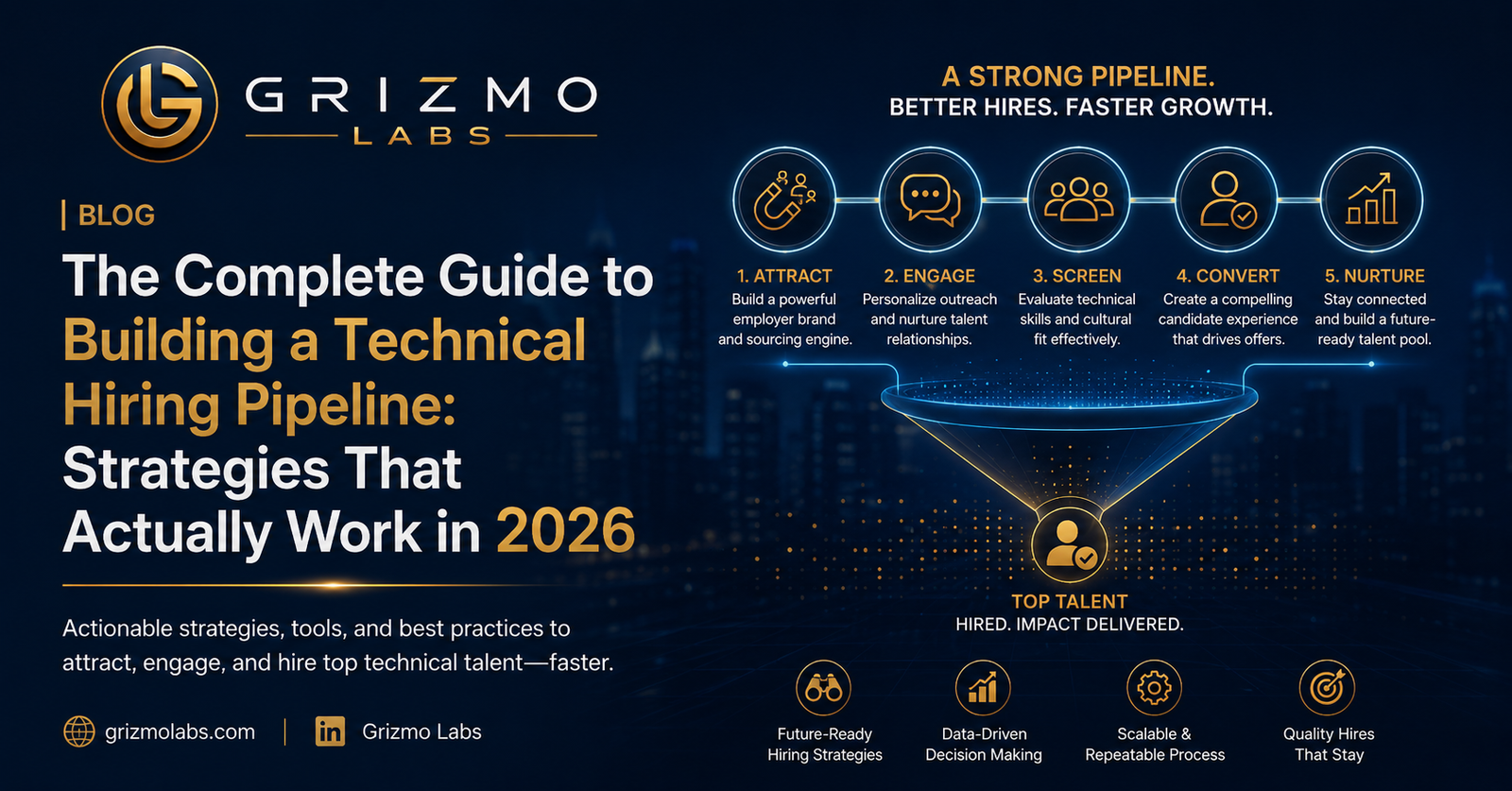
The solution? Building a technical hiring pipeline—a continuous, structured system for finding, evaluating, and hiring the right technical talent before you urgently need them.
Step 1: Define Requirements in Your Technical Hiring Pipeline
Before building your pipeline, have a clear understanding of what you need. Document specific technical skills, experience levels, and team dynamics needed. Define realistic timelines for your hiring process—from initial sourcing to offer stage. This clarity helps you target the right candidates and allocate resources effectively.
Step 2: Build Multiple Sourcing Channels in Your Hiring Pipeline
Don’t rely on a single recruitment source. Create a diverse sourcing strategy that includes:
- – Job boards and career pages
- – Technical communities and GitHub
- – Employee referrals
- – University partnerships
- – Technical events and conferences
- – LinkedIn and professional networks
- – Freelance platforms
Different candidate pools prefer different channels, so casting a wide net increases your chances of finding top talent.
Step 3: Screen Candidates with Your Technical Hiring Pipeline
Create a consistent evaluation framework to assess candidates objectively. This should include:
- – Skills assessment tests
- – Resume review criteria
- – Phone screening templates
- – Interview rubrics
Standardization reduces bias and ensures every candidate gets a fair evaluation while speeding up the screening process.
Step 4: Implement Interview Stages in Your Technical Hiring Pipeline
Use a tiered approach:
– Technical screening (coding challenges, technical questions)
– Team interviews (culture fit, communication)
– System design discussions (for senior roles)
– Leadership interviews (final decision makers)
Multiple perspectives help identify candidates who are both technically competent and culturally aligned.
5. Create an Employer Brand Strategy
Your pipeline effectiveness depends on how attractive your company is to candidates. Invest in:
– Company culture documentation
– Case studies and team spotlights
– Technical blog content
– Social media presence
– Employee testimonials
– Competitive compensation packages
A strong employer brand attracts better candidates and shortens your hiring cycle.
6. Nurture Long-Term Candidate Relationships
Not every candidate will be ready to join immediately. Build a talent community by:
- Staying in touch with promising candidates

- Sharing relevant opportunities

- Engaging on social media

- Offering value through content and resources

- Creating alumni networks
When a position opens, your warm pipeline of interested candidates can help you fill roles faster.
7. Optimize Your Offer and Onboarding Process
The hiring pipeline doesn’t end with an offer. Streamline:
- Offer letter generation

- Compensation negotiations

- Onboarding documentation

- First-week activities

- Mentor assignments

A smooth offer and onboarding experience improves acceptance rates and reduces time-to-productivity.

Key Metrics to Track

Measure your pipeline's effectiveness with these KPIs:

- Time-to-hire

- Cost-per-hire

- Candidate satisfaction scores

- Offer acceptance rate

- Quality of hires (performance reviews)

- Source effectiveness

- Pipeline conversion rates at each stage

Regularly review these metrics and adjust your strategy accordingly.
Final Thoughts
Building an effective technical hiring pipeline is a continuous process that requires ongoing refinement. By implementing these strategies, you'll reduce your dependency on reactive hiring, maintain a consistent flow of quality candidates, and significantly improve your chances of building a world-class engineering team. Start with the areas that will have the most impact for your organization, and gradually optimize each component over time.

Frequently Asked Questions

Q: How long does it take to build a technical hiring pipeline?
A: Building a technical hiring pipeline is not a one-time task but an ongoing process. Most companies see initial results within 3-6 months, but the pipeline becomes more efficient and effective over 12-18 months as you refine your processes and build relationships with candidates.

Q: What's the ideal size for a technical hiring pipeline?
A: A good rule of thumb is to maintain a pipeline with 5-10 qualified candidates per open position. This gives you enough options while ensuring the pipeline doesn't become unmanageable. As your company grows, you can expand this ratio.

Q: How often should we update our hiring criteria?
A: Review your hiring criteria at least quarterly or whenever your business needs change significantly. Market conditions, technology trends, and company growth can all impact the skills and experience you need in your team.

Q: Can we use the same pipeline for different technical roles?
A: While the framework remains the same, you should customize sourcing channels and screening criteria for different roles. For example, frontend developers and backend engineers may require different skill assessments and interview questions.

Q: What metrics indicate our hiring pipeline is successful?
A: Key indicators include reduced time-to-hire, improved quality of hires, higher offer acceptance rates, and better long-term employee retention. Track these metrics monthly to identify areas for improvement.

Q: How do we maintain relationships with candidates who aren't ready to join yet?
A: Share relevant content, invite them to company events, feature them on your blog or social media (with permission), and send personalized updates about opportunities that match their interests. The goal is to stay top-of-mind without being pushy.