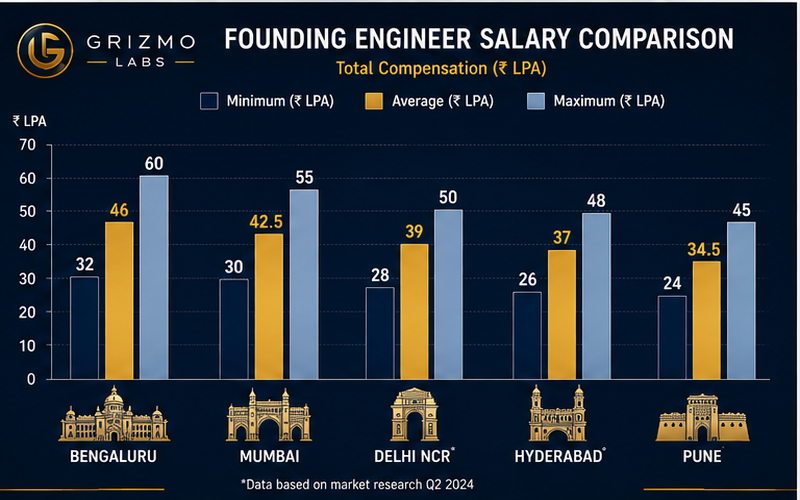
Essential Founding Engineer Salaries in India 2026 by CityI India has emerged as the global fintech hub, with over 2,100+ fintech startups and a rapidly growing ecosystem attracting international investment. For companies building fintech products, accessing India’s deep talent pool of software engineers is a game-changer—but the recruitment landscape is competitive and complex.
This guide walks you through everything you need to know about hiring fintech engineers in India: from understanding the talent market to navigating salary expectations, overcoming recruitment challenges, and implementing best practices.
The Indian FinTech Engineering Talent Landscape
Why India Dominates FinTech Recruitment
India’s engineering talent pool for fintech is unmatched. The country produces over 1.5 million engineering graduates annually, with a significant concentration in computer science and software development. Major cities like Bangalore, Hyderabad, Delhi, and Mumbai have become fintech epicenters.
Key advantages:
- Cost efficiency: Indian fintech engineers typically cost 40-60% less than their Western counterparts while maintaining comparable expertise
- Experience depth: Engineers often have 5-10+ years of experience with blockchain, payment systems, microservices, and cloud infrastructure
- Scale availability: Access to hundreds of qualified candidates for any role
- Time zone advantage: Minimal overlap with US/EU business hours enables 24/7 development cycles
- Cultural alignment: English-fluent, Western business-model familiar workforce
Market Dynamics & Competition
The fintech recruitment space in India is increasingly competitive. Major players—Razorpay, PhonePe, Stripe India, and global fintech companies—actively recruit top talent, driving up expectations and compensation packages.
Current market realities:
- Top-tier fintech companies offer equity, signing bonuses, and relocation packages
- Average retention period for experienced engineers is 2-3 years
- Remote work has intensified competition—candidates now consider global opportunities
- Skill specialization (blockchain, ML, payments) commands 20-30% premiums
Understanding Salary & Compensation Expectations
Engineering Role Salary Benchmarks (2024)
Compensation varies significantly by experience level, specialization, and company stage. Here’s what you can expect:
| Role | Experience | Annual Salary (INR) | Equity/Bonus |
|---|---|---|---|
| Junior Engineer (0-2 yrs) | Entry-level | 8-15 Lakhs | 5-10% signing bonus |
| Mid-level Engineer (2-5 yrs) | Intermediate | 15-30 Lakhs | 10-20% ESOP grant |
| Senior Engineer (5-8 yrs) | Advanced | 30-50 Lakhs | 0.5-1.5% equity |
| Principal/Staff Engineer (8+ yrs) | Expert | 50-100+ Lakhs | 1-3% equity |
| DevOps/Infra Specialist | Depends on experience | 20-45 Lakhs | 10-20% bonus |
| Blockchain Engineer | Depends on experience | 25-50 Lakhs | 15-25% bonus |
Salary multipliers by specialization:
- Blockchain/Web3: +25-30%
- Machine Learning: +20-25% Payment systems: +15-20%
- Cloud architecture: +15-20%
Total Compensation Package Components
Beyond base salary, competitive offers include:
- Sign-on bonus: 5-25% of annual salary (especially for senior hires)
- Performance bonus: 10-20% annual (quarterly/annual payout)
- Equity/ESOP: 0.1-3% based on seniority (4-year vesting typical)
- Health insurance: Comprehensive medical, dental, vision coverage
- Relocation assistance: For candidates relocating to office cities
- Professional development: Training budget (₹1-3 Lakhs annually for senior roles)
Key Challenges in FinTech Talent Acquisition
Challenge #1: Skill Gaps & Experience Mismatches
The problem: Most engineering graduates lack direct fintech experience. Payment systems, regulatory compliance, transaction processing, and security architecture aren’t taught in conventional computer science programs.
Solution strategies:
- [INTERNAL LINK: “fintech-skills-checklist” “Create a competency matrix”] focusing on transferable skills (microservices, distributed systems, databases)
- Look for engineers who’ve worked with payment gateways (Stripe, Razorpay, Square) even outside fintech
- Consider mid-level candidates with strong fundamentals and mentor them into fintech expertise
- Partner with bootcamps specializing in fintech engineering
Challenge #2: Retention & Poaching
The problem: Star engineers receive multiple offers monthly. Counteroffers, better equity packages, and remote opportunities create constant flight risk.
Retention tactics:
- Offer clear career progression with defined milestones (IC1-5 levels)
- Grant equity refreshes every 2 years to extend vesting incentives
- Create specialized technical tracks (Architecture, Security, Infrastructure)
- Invest in learning budgets and conference attendance
- Build a strong engineering culture and mentorship programs
Challenge #3: Verification & Background Checks
The problem: Resume inflation is common. Candidates exaggerate past project scope, technologies, and achievements.
Due diligence process:
- Conduct technical assessments before interviews (coding challenges, system design)
- Verify employment directly with previous employers via LinkedIn/official channels
- Request GitHub profiles, contributions to open-source projects, technical articles
- Use reference checks specifically focused on project delivery and problem-solving
- Conduct security clearances for regulated fintech roles
Challenge #4: Visa & Relocation Logistics
The problem: For international hiring, visa sponsorship, relocation, and legal compliance add complexity and cost.
Navigating this:
- Clarify visa sponsorship upfront (some candidates require it, others don’t)
- Budget ₹3-5 Lakhs for relocation assistance (flights, housing, moving costs)
- Partner with immigration consultants for L1, H1-B sponsorship handling
- Consider flexible remote arrangements to bypass relocation entirely
Best Practices for Fintech Talent Acquisition
1. Define Your Ideal Candidate Profile
Before recruiting, clearly outline:
- Technical stack: Specific languages (Java, Python, Go), databases (PostgreSQL, MongoDB), cloud platforms (AWS, GCP)
- Domain expertise: Payment systems, lending, investment, compliance—what’s essential vs. nice-to-have?
- Seniority level: Are you hiring to build or lead?
- Soft skills: Communication, ownership mentality, ability to thrive in fast-paced environments
[INTERNAL LINK: “job-description-template” “Use a detailed job description template”] that attracts quality candidates and filters tire-kickers early.
2. Source from Multiple Channels
Diversify your sourcing strategy:
- Niche job boards: AngelList, CrunchBase Hiring, Wellfound (startup-focused)
- Fintech-specific communities: FinTech Circle, Indian FinTech Association events
- LinkedIn talent: Direct sourcing with Boolean search strings (requires trained recruiters)
- Referral programs: Offer ₹1-3 Lakh referral bonuses for successful hires
- University partnerships: Placement relationships with IITs, BITS, IIIT for fresh talent
- Fintech bootcamps: Springboard, Udacity, Coursera fintech graduates
- Engineering communities: GitHub, Stack Overflow, tech meetups in Bangalore, Hyderabad, Mumbai
3. Structure Technical Interviews Effectively
A robust technical interview process weeds out unqualified candidates and identifies top talent:
Round 1: Coding Challenge (1 hour)
- Medium complexity algorithmic problems (sorting, dynamic programming, graph problems)
- Assess code quality, edge case handling, and problem-solving approach
Round 2: System Design (1-1.5 hours, for mid-level+)
- Design a payment processor, wallet system, or lending platform
- Evaluate architectural thinking, scalability, and trade-off awareness
Round 3: Behavioral Interview (45 minutes)
- Ask situational questions about past fintech challenges (concurrency, data consistency, security)
- Assess teamwork, communication, and ability to handle ambiguity
Round 4: Compensation & Culture Fit (30 minutes)
- Discuss compensation, growth, and role expectations
- Ensure alignment with company culture and fintech mission
4. Competitive Compensation Packages
To attract top talent, your offer must be compelling:
- Match or exceed market rates for roles you’re hiring. Use [EXTERNAL LINK: “Glassdoor fintech salary reports, PayScale India benchmarks”]
- Frontload equity for early-stage startups. While salaries may be 10-20% below established companies, equity upside can bridge the gap
- Transparent salary bands: Publish salary ranges to attract candidates and reduce back-and-forth negotiation
- Performance incentives: Quarterly bonuses tied to delivery milestones
5. Build an Employer Brand in FinTech
Top engineers want to work at companies making an impact:
- Showcase impact: Share case studies of fintech products you’ve built
- Write technical content: [INTERNAL LINK: “/blog/engineering” “Publish engineering blog posts”] on challenges you’re solving
- Speak at events: Sponsor or host fintech meetups and tech talks
- Contribute to open source: Show commitment to the developer community
- Transparent culture: Share your company’s values, compensation philosophy, and growth trajectory
6. Streamline Your Hiring Timeline
Engineers receive multiple offers simultaneously. Slow hiring loses candidates.
- Target timeline: 2-3 weeks from first contact to offer
- Parallel interviews: Run coding challenge and behavioral rounds simultaneously
- Quick feedback loops: Get hiring team consensus within 24 hours of final interview
- Competitive offers: Include offer letter, equity documentation, and start date options
- Assign an onboarding partner: Designate a team member to build rapport pre-joining
Specialized FinTech Engineering Roles
Payment Systems Engineers
What they do: Build payment gateways, transaction processors, settlement systems
Required skills: Low-latency systems, distributed databases, PCI compliance, API design
Salary range: 25-55 Lakhs (5+ years experience)
Where to find: Stripe, PayU, Amazon Pay, Razorpay alumni; SWIFT/banking background
Blockchain & Web3 Engineers
What they do: Develop blockchain infrastructure, smart contracts, DeFi protocols
Required skills: Solidity, Rust, consensus algorithms, cryptography basics
Salary range: 30-70 Lakhs (blockchain premium)
Where to find: Crypto communities, GitHub blockchain projects, Web3 bootcamps
FinTech Data Engineers
What they do: Build data pipelines, analytics, fraud detection systems
Required skills: Spark, Kafka, SQL, Python, distributed systems knowledge
Salary range: 22-50 Lakhs (5+ years experience)
Where to find: Analytics-heavy companies (e.g., Amazon, Flipkart), data science communities
Security & Compliance Engineers
What they do: Ensure regulatory compliance, manage cybersecurity, build audit systems
Required skills: GDPR, PCI DSS, security architecture, cryptography
Salary range: 28-60 Lakhs (compliance premium)
Where to find: Banking tech, cybersecurity companies, fintech regulatory teams
Recruitment Process Timeline & Checklist
Week 1-2: Sourcing & Screening
- Post job descriptions on 5+ channels
- Source candidates via LinkedIn Boolean search (target 30-50 leads)
- Screen resumes for technical fit (look for system design, payment systems, security)
- Schedule phone screens with top 10-15 candidates
- Conduct culture/expectation alignment calls
Week 2-3: Technical Assessment
- Send coding challenges to screened candidates
- Grade submissions within 24 hours
- Schedule system design interviews for top performers
- Conduct behavioral interviews
Week 3-4: Decision & Offer
- Calibrate final candidates with hiring committee
- Make data-driven offer decision
- Extend offer with competitive package
- Negotiate if needed (budget flexibility for top talent)
- Finalize start date
Week 4-6: Onboarding Prep
- Prepare technical onboarding (setup development environment, code access)
- Assign onboarding buddy from existing team
- Schedule first-day meetings and orientation
- Set 30-60-90 day goals
Legal & Compliance Considerations
Employment Contracts
- Non-Compete Clauses: Enforceable but should be reasonable (6-12 months, limited scope)
- Intellectual Property: Ensure clear IP assignment to company
- Confidentiality: Standard NDAs for sensitive fintech projects
- Garden Leave: Consider for senior/specialized roles
Regulatory Compliance
- PAN & Aadhar Verification: Required for payroll
- ESI & PF: Mandatory for employees earning < 25,000/month
- Income Tax Compliance: TDS deductions based on salary slabs
- Fintech-specific: Ensure compliance with RBI guidelines if building regulated products
FAQ
Q1: What’s the typical time-to-hire for a fintech engineer in India?
A: 2-4 weeks for mid-level engineers, 4-6 weeks for senior roles. Longer timelines occur when candidates require extensive technical vetting or visa sponsorship. Competitive offers and parallel interviews accelerate the process.
Q2: Should I hire fresh graduates for fintech roles?
A: Yes, if you’re willing to invest in training. Fresh IIT/BITS graduates have strong fundamentals and adapt quickly to fintech. Budget 3-6 months for ramp-up and pair them with mentors. Salary expectation: 8-12 Lakhs annually.
Q3: How do I assess if a candidate’s fintech experience is genuine?
A: Ask specific questions: “Tell me about your payment processing pipeline,” “How did you handle transaction idempotency?”, “Walk me through a security incident.” Request GitHub contributions or technical blog posts. Verify employment with previous managers.
Q4: What’s the difference between hiring for a startup vs. established fintech company?
A: Startups offer equity upside, autonomy, and rapid growth but lower stability. Established companies offer stability, structured career paths, and immediate compensation. Tailor messaging to candidate priorities—ambitious engineers lean startup, risk-averse candidates prefer stability.
Q5: Is remote hiring feasible for fintech roles?
A: Yes, especially for backend/infrastructure roles. Security-sensitive roles (compliance, fraud) may require office presence. Many companies offer hybrid (3-4 office days) as a middle ground. Ensure time zone compatibility for collaboration.
Q6: How do I compete with mega-cap tech companies for fintech talent?
A: Focus on impact, autonomy, and growth speed. Emphasize solving real financial problems, learning cutting-edge technologies, and career acceleration. Offer competitive equity with clearer vesting timelines and transparent promotion paths.
Conclusion & Next Steps
Hiring exceptional fintech engineering talent in India requires a strategic blend of market intelligence, compelling compensation, streamlined processes, and strong employer branding. The competition is fierce, but India’s vast talent pool ensures you’ll find the right candidates if you:
- Define clear requirements and communicate value proposition effectively
- Offer competitive compensation with equity upside for believers in your mission
- Run efficient technical interviews that identify true capability
- Build lasting relationships with candidates—even rejected ones may refer talent
- Invest in retention through career development and culture-building
The fintech revolution in India is just getting started. Engineers who build these platforms today will shape how billions transact tomorrow. By positioning your company as a place where talented engineers solve meaningful problems, you’ll attract the best talent.
Ready to build your fintech team? Start by defining your hiring roadmap, allocating recruitment budget, and identifying priority roles for Q1.
[INTERNAL LINK: “/contact” “Schedule a fintech recruitment consultation with our team”] or [INTERNAL LINK: “/job-board” “post your fintech role on our specialized job board”].