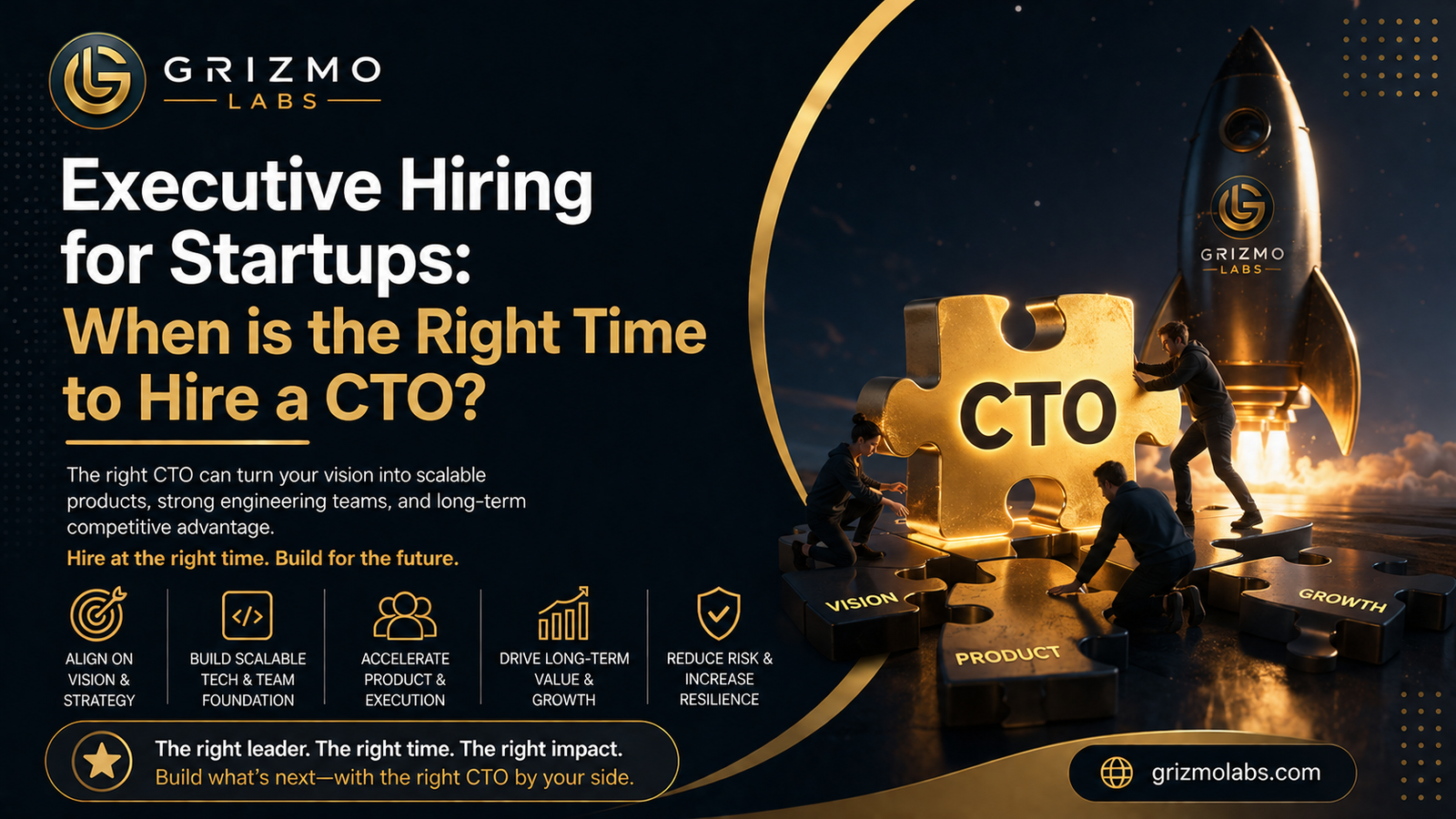
Knowing when to hire a CTO is one of the most important — and most confusing — decisions a startup founder will make. Get the timing right, and a Chief Technology Officer becomes a growth multiplier. Get it wrong, however, and you end up paying executive-level costs for a role your company isn’t ready for yet.
So when should you actually make the hire? The answer depends on a few things: your product’s complexity, your team size, your funding stage, and where you want the company to go next. In this guide, you’ll learn how to recognize the right timing, avoid the most common hiring mistakes, and understand what actually makes a CTO valuable.
Show Image
Why Startups Don’t Need a CTO on Day One
A common myth says you should hire a CTO as soon as you close funding. In practice, though, that’s rarely the right move.
At the idea or MVP stage, a Founding Engineer or technical co-founder usually provides all the technical leadership you need. They can move fast. They can wear multiple hats. As a result, they can build the first version of your product without the overhead of a full executive hire.
So when does a CTO actually become necessary? Typically, the need shows up later — once technical complexity increases, customer expectations rise, and product decisions become harder to make without dedicated leadership.
Related reading: How to Hire the Right Founding Engineer for Your Startup in 2026
5 Signs It’s Time to Hire a CTO
Here are the clearest signals that your startup has outgrown informal technical leadership and genuinely needs an executive at the helm.
1. Your Engineering Team Is Growing Fast
Managing five engineers is one job. Managing twenty is a completely different one. Because of this shift, a CTO becomes essential — they build the processes, mentor team leads, and shape the engineering culture that keeps a growing team aligned and productive.
2. Your Product Has Gotten More Complex
As products mature, technical debt naturally piles up. Left unmanaged, it slows everything down. A CTO helps your team:
- Improve software architecture
- Reduce engineering bottlenecks
- Increase platform reliability
- Build systems that scale with demand
Show Image
3. Investors Expect Strong Technical Leadership
Series A and Series B investors often evaluate leadership just as closely as they evaluate metrics. In fact, Y Combinator’s guidance for founders repeatedly stresses that team strength is one of the first things investors assess. A capable CTO builds investor confidence, mainly by presenting a clear technology roadmap and a credible execution strategy.
4. Product Delivery Has Slowed Down
Missed deadlines are rarely just a scheduling problem. More often, they point to deeper engineering issues. That’s where a CTO steps in: they diagnose process breakdowns, improve delivery velocity, and align engineering output with business priorities.
5. Technical Decisions Are Outpacing Your Current Leadership
If product and engineering decisions increasingly require trade-offs no one on the team feels equipped to make, that’s a clear sign. At this point, you need someone whose full-time job is technology strategy — not someone juggling it alongside everything else.
What Makes a Great Startup CTO?
Technical skill is table stakes. Beyond that, the best startup CTOs pair deep technical expertise with business judgment and leadership. Specifically, look for someone who can:
- Build and structure engineering teams
- Define technical architecture and long-term strategy
- Recruit and retain strong developers
- Mentor engineering managers
- Align technology decisions with business goals
- Communicate credibly with investors
- Lead teams through periods of rapid growth
Coding ability alone doesn’t make a great CTO. Leadership, ultimately, does.
Common CTO Hiring Mistakes to Avoid
Hiring Too Early
Early-stage startups rarely need executive-level technical leadership. Instead, in the earliest phase, experienced engineers who can build quickly will serve you better than a CTO with nothing yet to lead.
Hiring Only for Technical Skills
Coding ability matters, but it isn’t the differentiator. After all, a CTO also needs to inspire teams, make strategic calls under uncertainty, and communicate clearly across departments — not just write good code.
Ignoring Culture Fit
Even highly experienced executives can fail if they don’t fit the company’s culture. For this reason, prioritize candidates who genuinely share your startup’s vision and values, not just an impressive resume.
CTO vs. Founding Engineer: What’s the Difference?
These two roles get confused often. Still, they serve different purposes at different stages.
| Founding Engineer | CTO | |
|---|---|---|
| Primary focus | Building the first version of the product | Technology strategy and long-term direction |
| Scope | Hands-on coding, early product decisions | Team leadership, hiring, engineering operations |
| Best fit for | Idea/MVP stage | Post-PMF, scaling stage |
In short, if you’re still building your MVP, you likely need a Founding Engineer before you need a CTO.
Related reading: Founding Engineer vs. CTO: Which One Should Your Startup Hire First?
How Grizmo Labs Helps Startups Hire the Right CTO
At Grizmo Labs, we help startups find exceptional technology leaders — not just strong engineers. Our executive hiring process evaluates candidates across six dimensions:
- Leadership ability
- Technical expertise
- Startup experience
- Team-building capability
- Product thinking
- Cultural alignment
Whether you’re assembling your first engineering team or preparing for a Series A raise, we help you find leaders who can scale with your business.
Final Thoughts
Hiring a CTO is one of the highest-stakes decisions a founder will make. Get the timing right, and it becomes a long-term growth multiplier. Get it wrong, and it becomes an expensive mistake.
So don’t hire a CTO simply because other startups have one. Instead, hire one because your business genuinely needs executive technology leadership — and hire when the signs above tell you it’s time.
Frequently Asked Questions
When should a startup hire its first CTO? Most startups bring on a CTO after validating product-market fit, expanding their engineering team, or preparing to scale.
Can a Founding Engineer become a CTO? Yes. Many Founding Engineers grow into the CTO role, especially once they demonstrate strong leadership, strategic thinking, and team-building skills.
What’s the difference between a CTO and a VP of Engineering? A CTO owns technology vision and innovation. A VP of Engineering, on the other hand, owns execution — managing delivery, operations, and day-to-day engineering output.